By Kees Propstra,
VP Product Marketing
The data center industry is undergoing one of its most significant transitions in a decade. As AI, cloud, and high‑performance computing workloads continue to surge, operators are turning to optical interconnects, co‑packaged optics (CPO), and photonic integrated circuits (PICs) to meet unprecedented bandwidth and power‑efficiency demands. We’re seeing higher beachfront density, more wavelengths per device, and escalating channel counts – all pushing optical architectures to the limits of what traditional test strategies can handle.
These technology shifts come with a fundamental challenge: high‑volume optical test is not yet scaling like electrical wafer-level testing has in traditional semiconductor fabrication. PICs and CPO modules require characterization of optical parameters across wafer, die, and module stages, fiber‑array alignment and attachment, and 100% test coverage for high‑speed I/O validation at 100G and beyond. With dozens of channels and multiple wavelengths per device, serial test approaches simply can’t keep up.
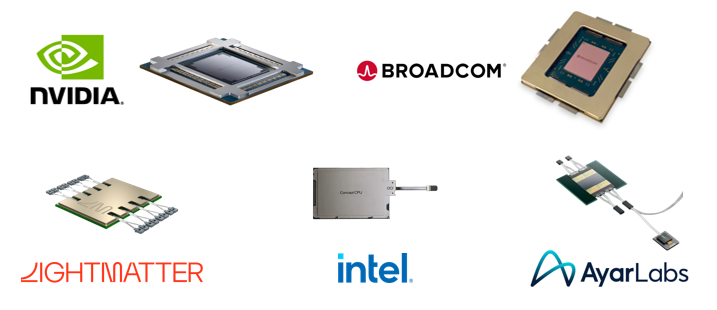
To support the next wave of optical interconnect innovation, the industry needs true scalable and parallel test capability. That means high‑density instruments, synchronized mixed‑signal measurement, parallel optical power generation and measurement, parallel at‑speed optical testing, and test systems that flexibly transition from validation into high‑volume manufacturing. This is exactly where the combination of PXI and automated test equipment (ATE) has proven transformative.
PXI offers a mature, multi‑vendor ecosystem with integrated timing, synchronization, and automation – all essential for testing complex photonic devices at scale. It enables engineers to pack more capability into a smaller footprint while achieving correlation between stimulus and measured data across large channel counts. And because PXI integrates readily with existing equipment such as wafer probers, alignment systems, and automation software, it becomes the backbone of a unified, scalable test strategy.
But success requires more than technology. It requires collaboration across the ecosystem – from PIC/CPO developers, foundries, OSATs and CMs, to equipment vendors and software partners. By working together, we can accelerate the adoption of optical interconnects and ensure the test capability keeps pace with the innovation it enables.
For a deeper look at the technology and test methodologies shaping this transition, I recommend reading our white papers on PXI‑based high‑volume PIC testing and strategies for validating next‑generation optical interconnects.
Have a test challenge you’d like to discuss?
We’re very interested to hear from anyone who is evaluating their PIC and CPO testing options. Please reach out at sales@quantifiphotonics.com or contact us.
We’re also at OFC 2026 – come see the Quantifi Photonics team at booth 4901, West Hall from 17-19 March, LA Convention Center. We’d love to see you there!